New York Botanical Garden

Feelin' Groovy

The Sixties era in the United States evokes so many images and sounds — psychedelic art, protests, love-ins, rock ‘n’ roll, the counterculture. The New York Botanical Garden opened Flower Power in May to “evoke the free-spirited heart of the 1960s peace and love movement.” The garden stressed the botanical side of the era, as well it should, in the conservatory as well as in pop-up displays throughout the grounds.

I lived through the 60s. I am grateful for the garden’s efforts to remind us of our history, and maybe educate new generations. But I do admit to walking through the show wondering if this really represented the times I lived through.
In the NYBG Conservatory

“Just kicking down the cobblestones,
Looking for fun and feelin’ groovy.”
— Paul Simon, 1966

By the time I got to college in 1967, more than 200,000 young American men each year were being drafted to fight in the jungles half a world away. The culture on campuses across the country was reported as focusing on sex, drugs and rock ‘n’ roll, and protests against the war were grabbing headlines. Also in that environment were the simmering black liberation and women’s liberation movements.

Despite all these distrations, students kept studying and learning, and believing there was a possible future, if we just paid attention and fought for what we believed in. The Sixties were a time of chaos, but also a time of great hope. Young people were discovering new sounds, new ways of dressing, new political realities. Yet our male classmates were looking at the draft and trying to figure out how to dream of a future that didn’t involve dying or getting injured in a country few had even heard of.

I put together a video to show the Flower Power show as I experienced it on June 26 (the show closes on October 18).

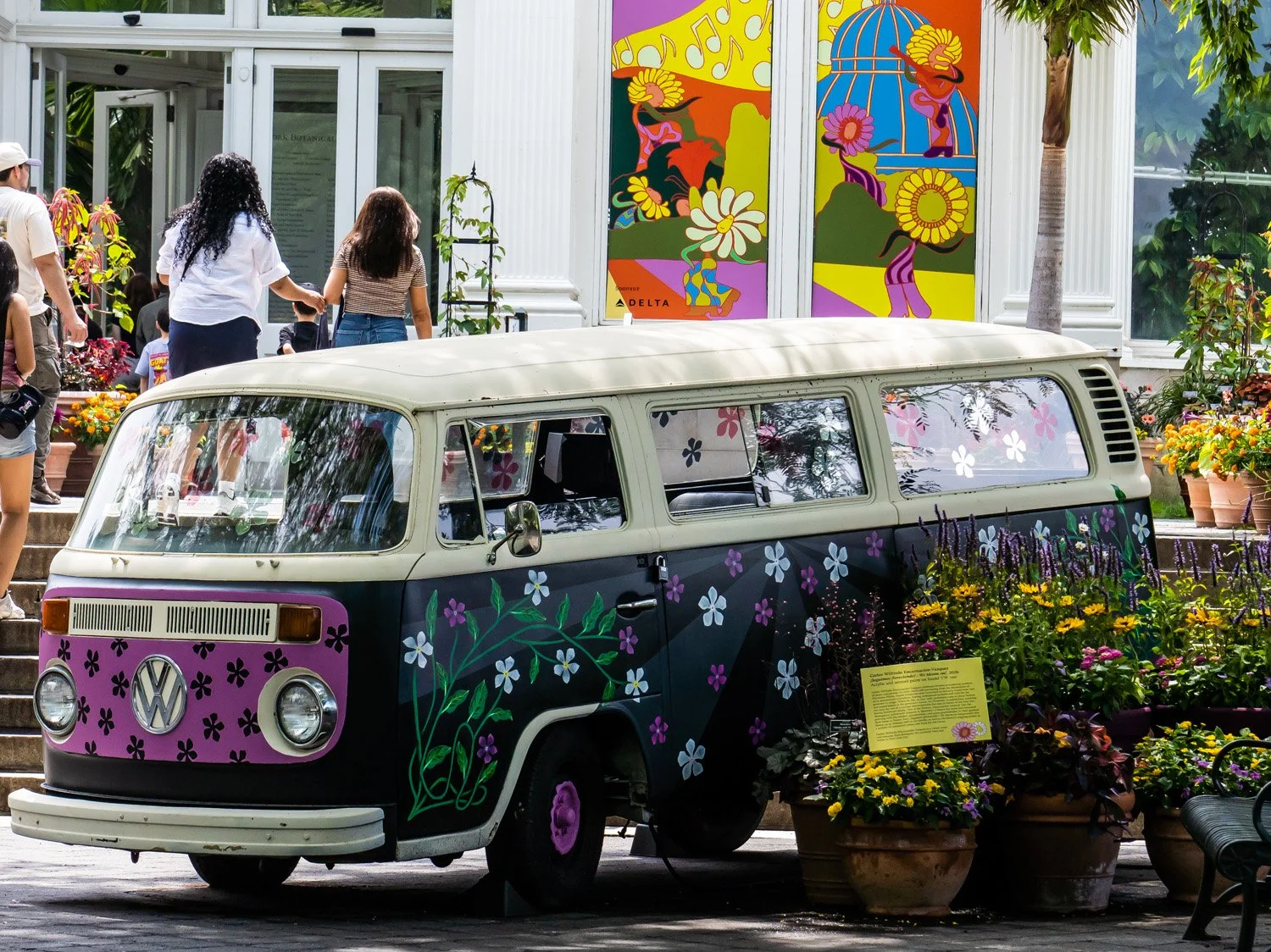
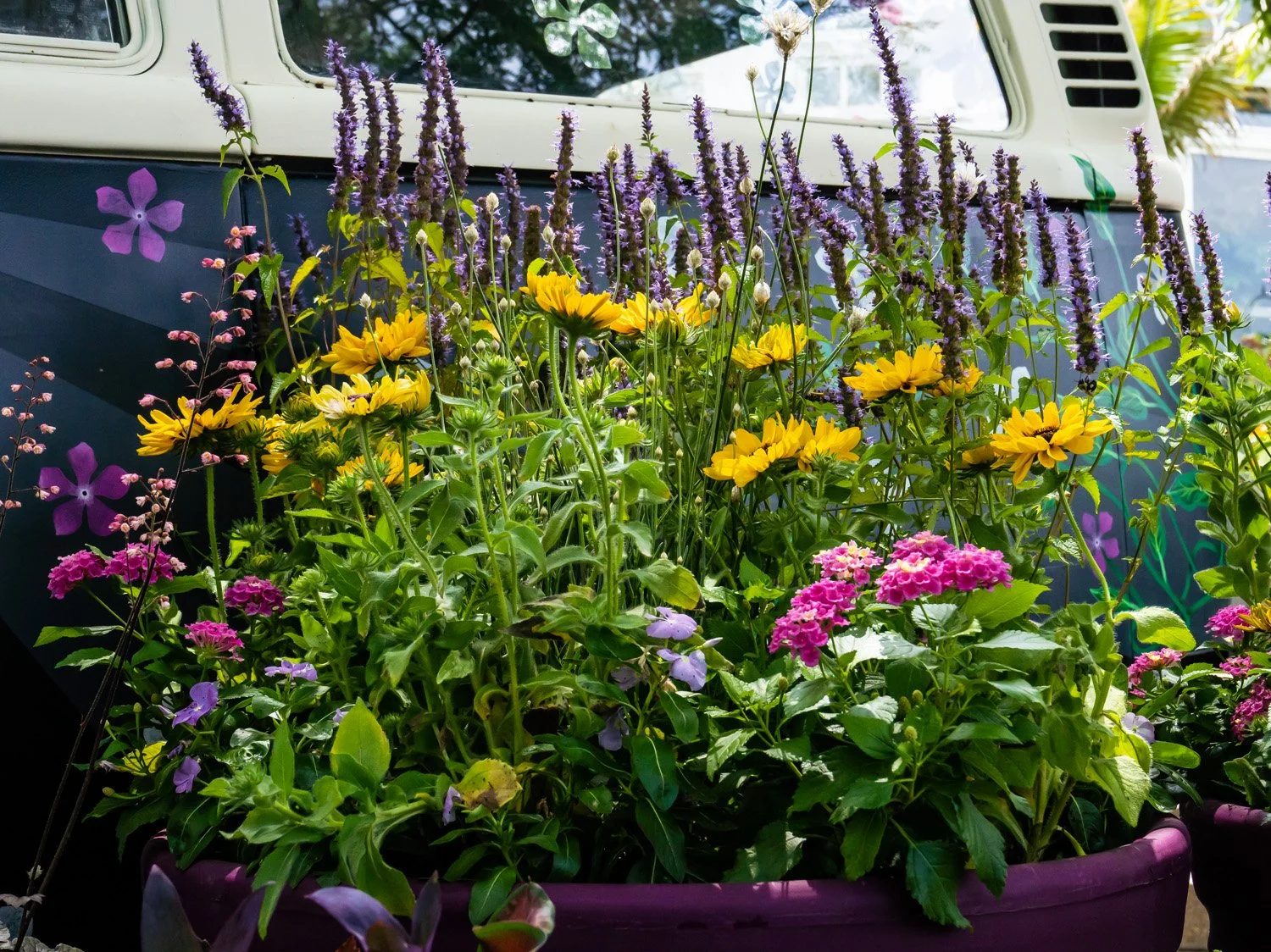
Before entering the conservatory, visitors get to see a painted VW bus surrounded by flowers. So far, so good! (We drove from Boulder, Colorado, to a concert in Fort Collins in a painted VW bus.)
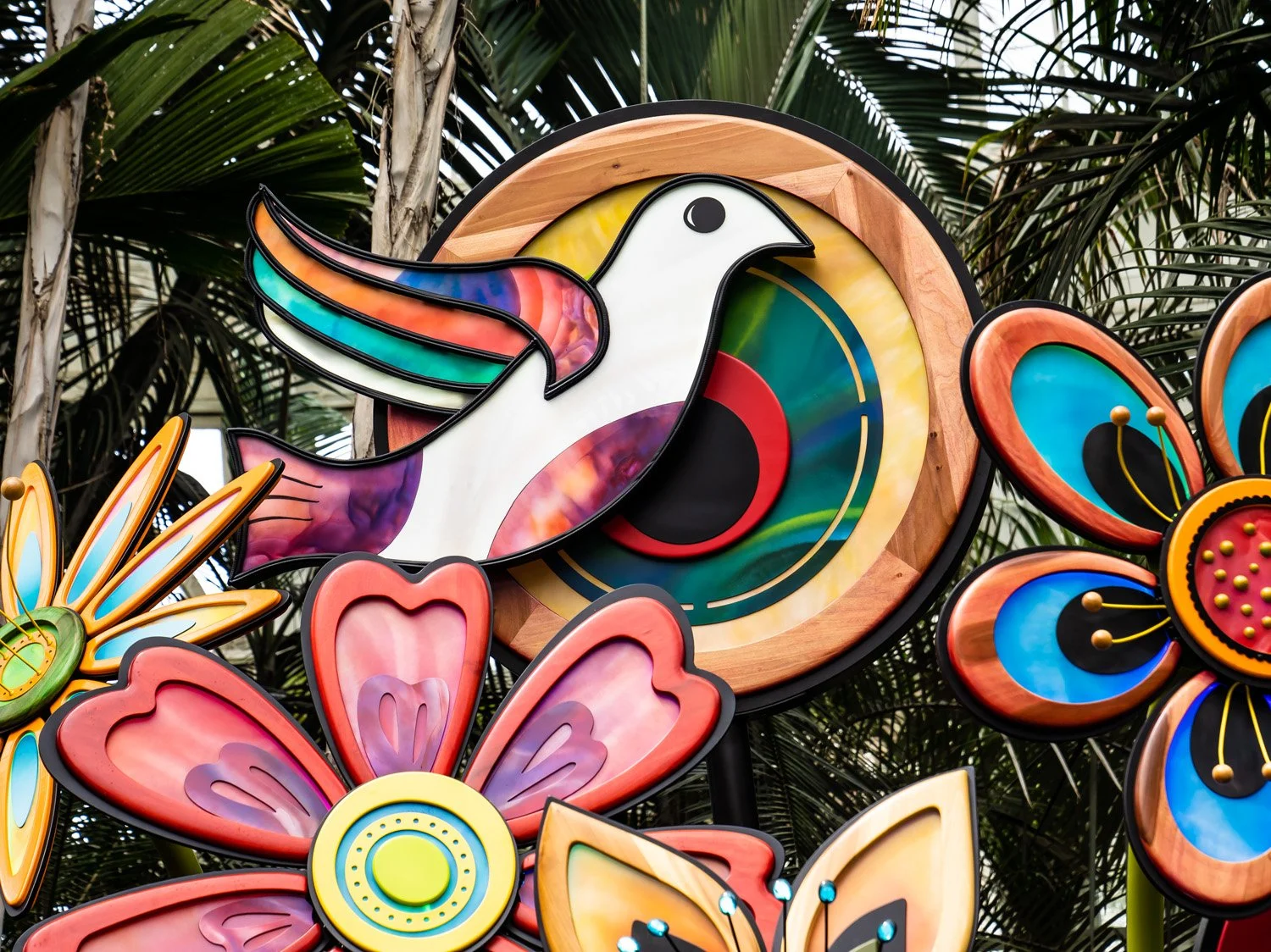
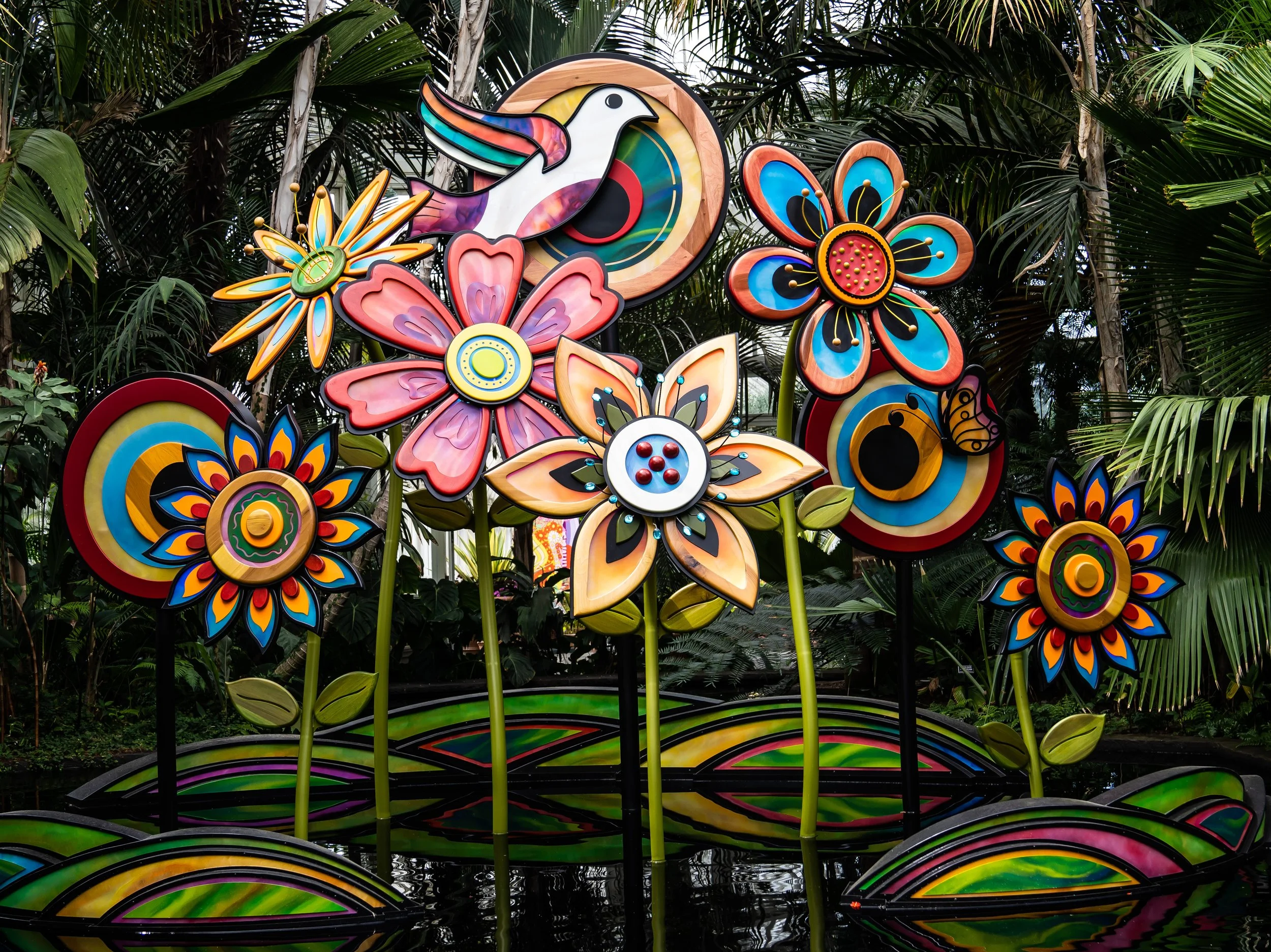
The first sight to greet you once inside the conservatory is a collection of joyful, colorful flowers, a butterfly and a dove of peace.
The flowers in the conservatory were lovely when I went in late June, and my understanding is that the flowers changed as the summer progressed. These are the ones I got to see.
The walkway featuring counterculture banners and plantings was evocative of that aspect of the 60s.
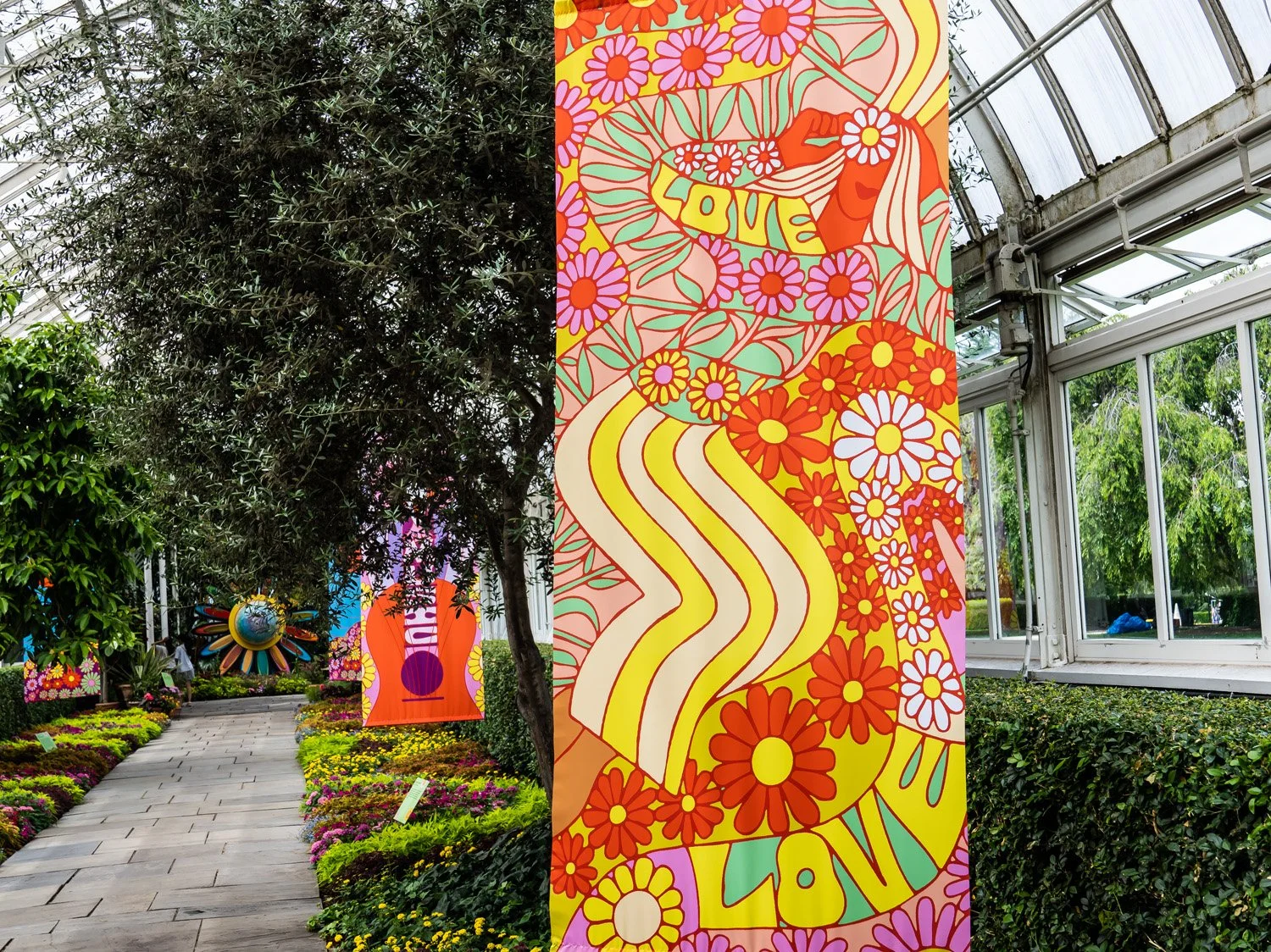
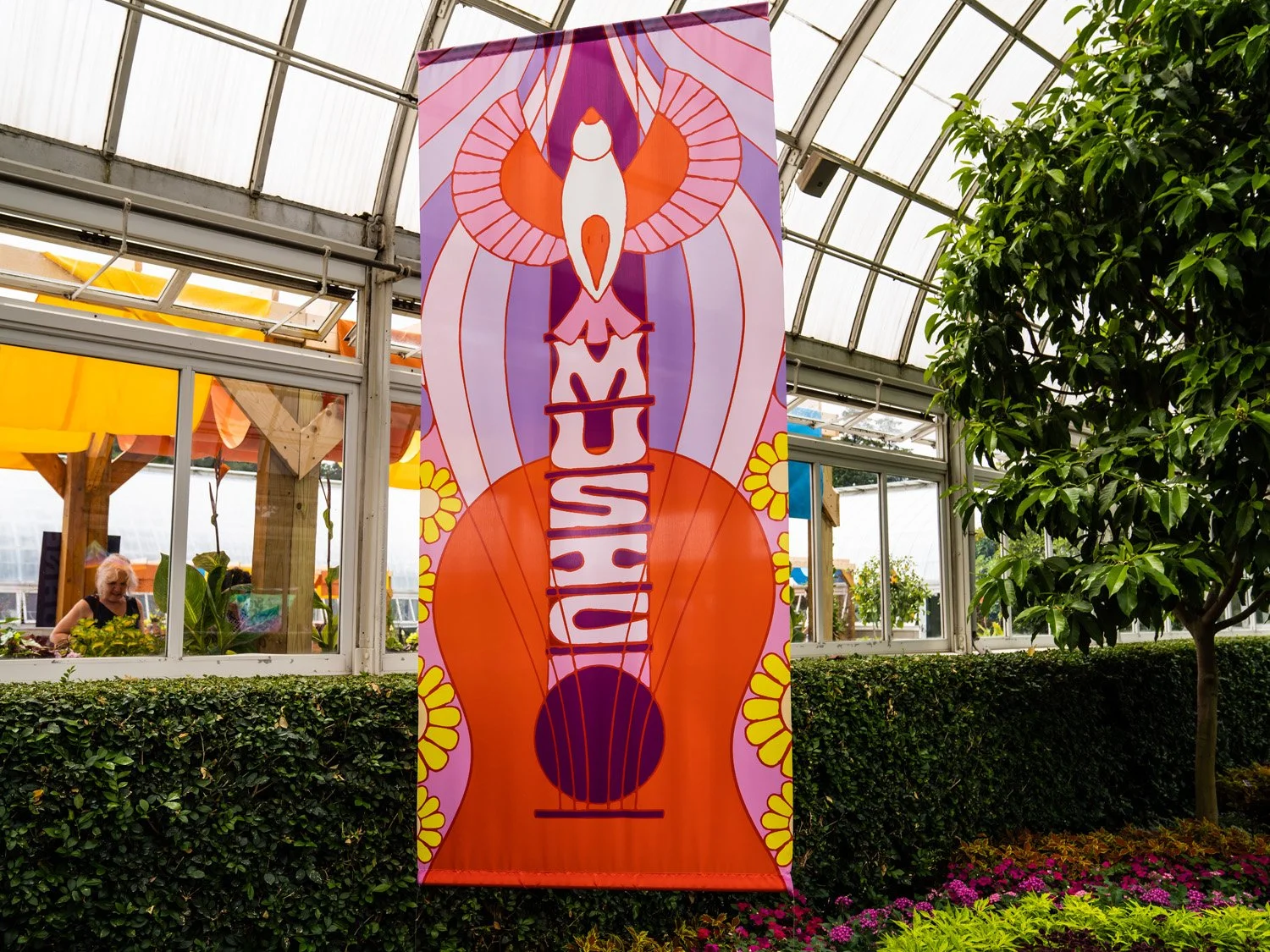
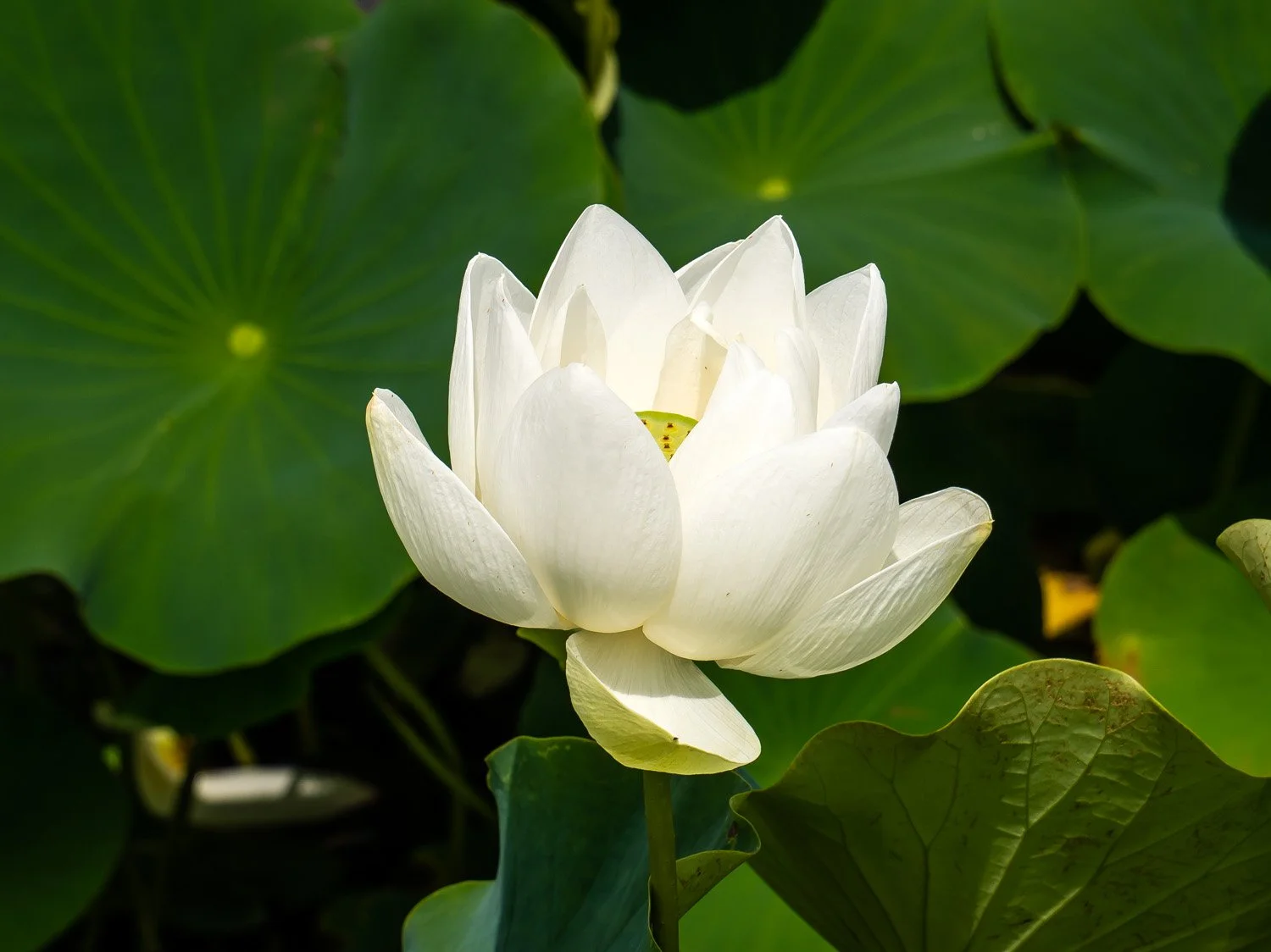
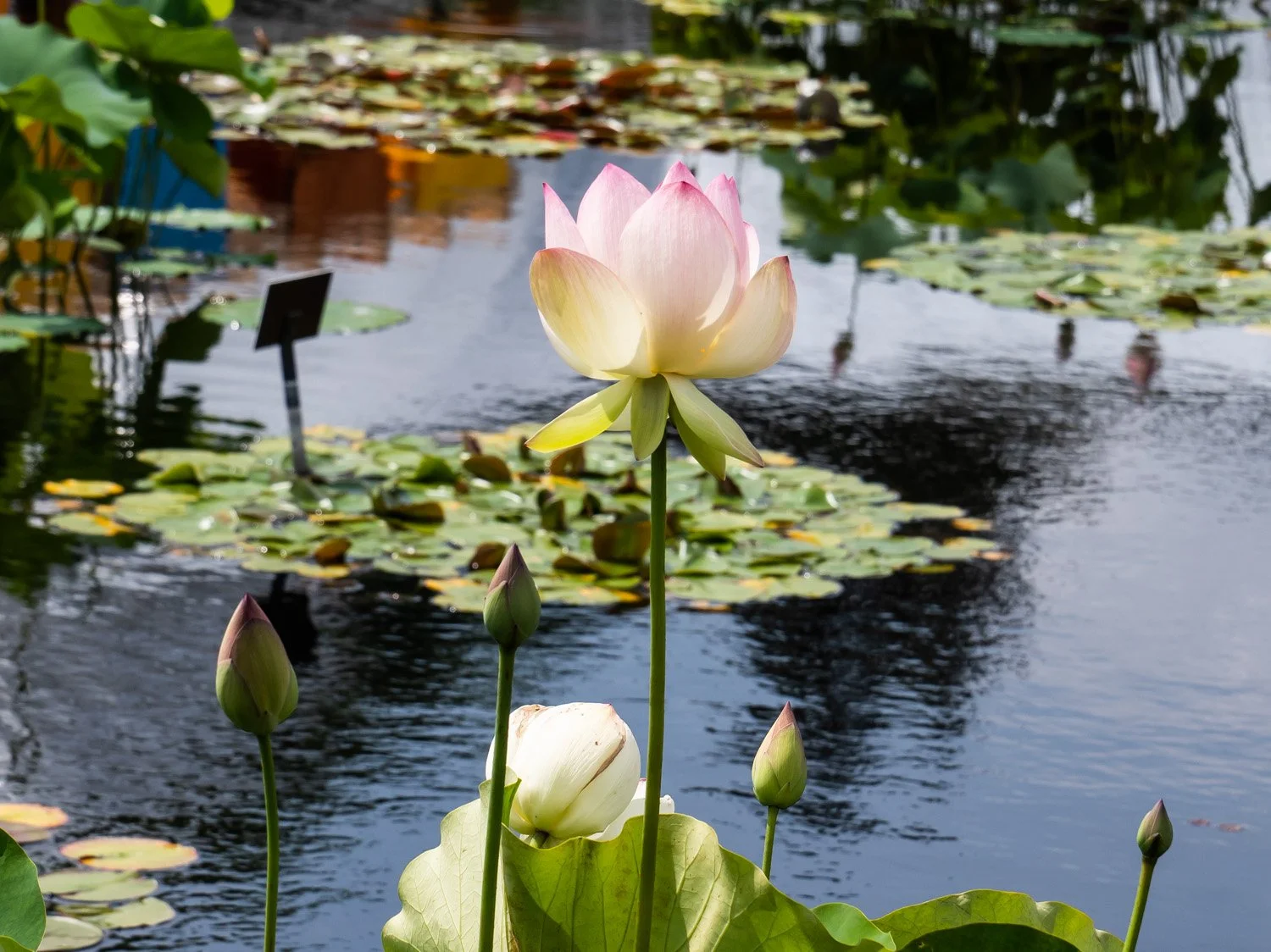
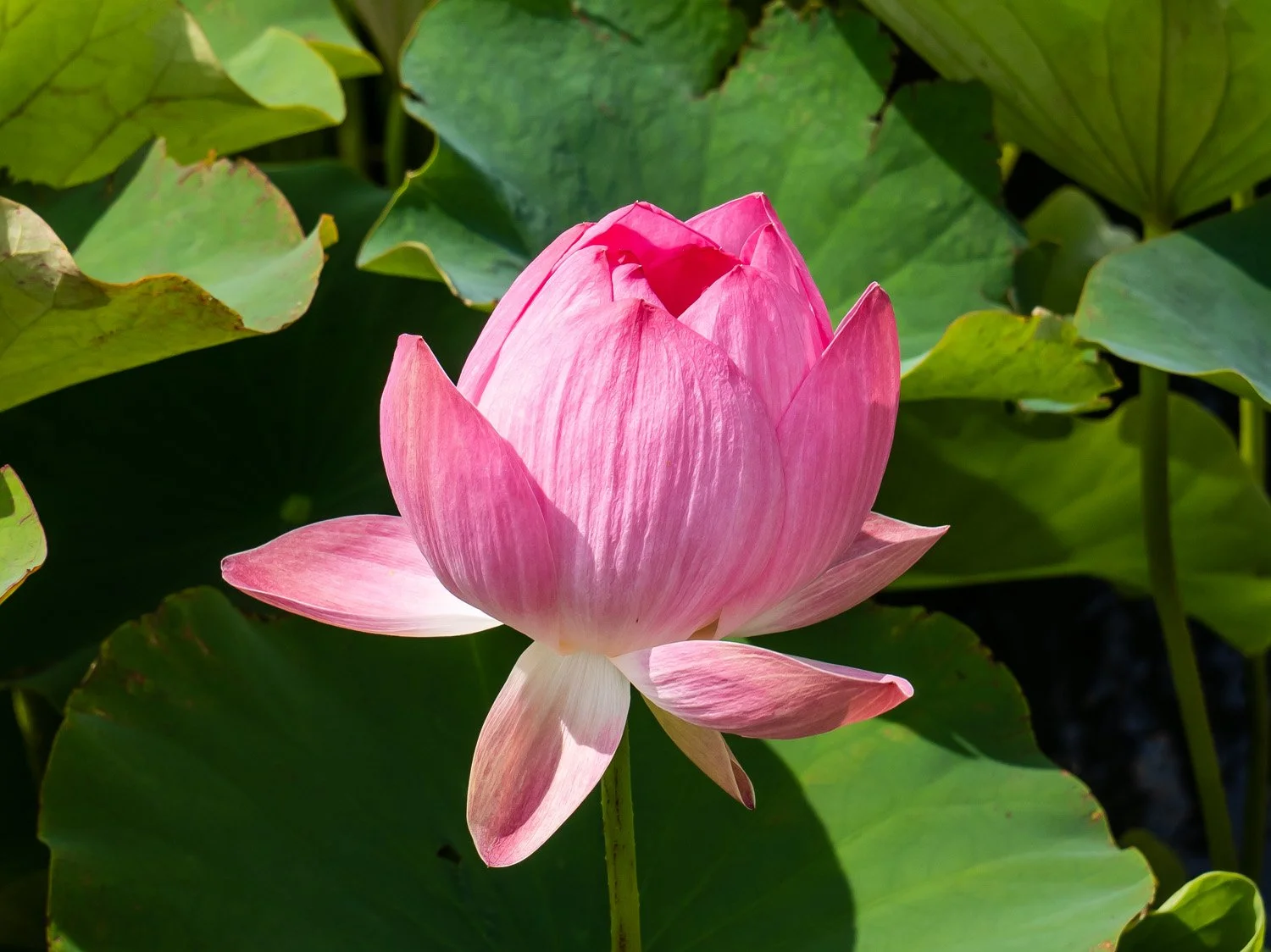
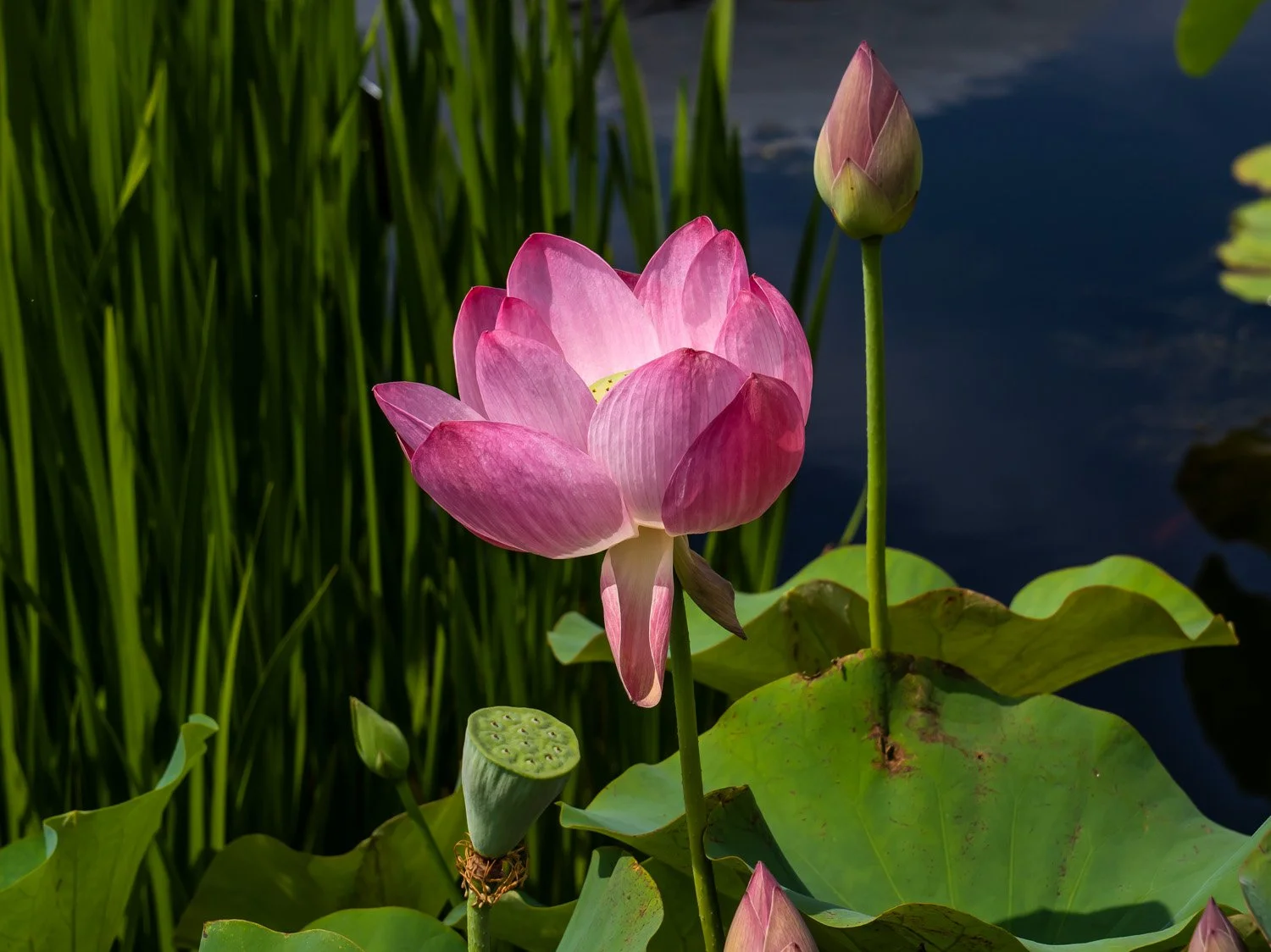
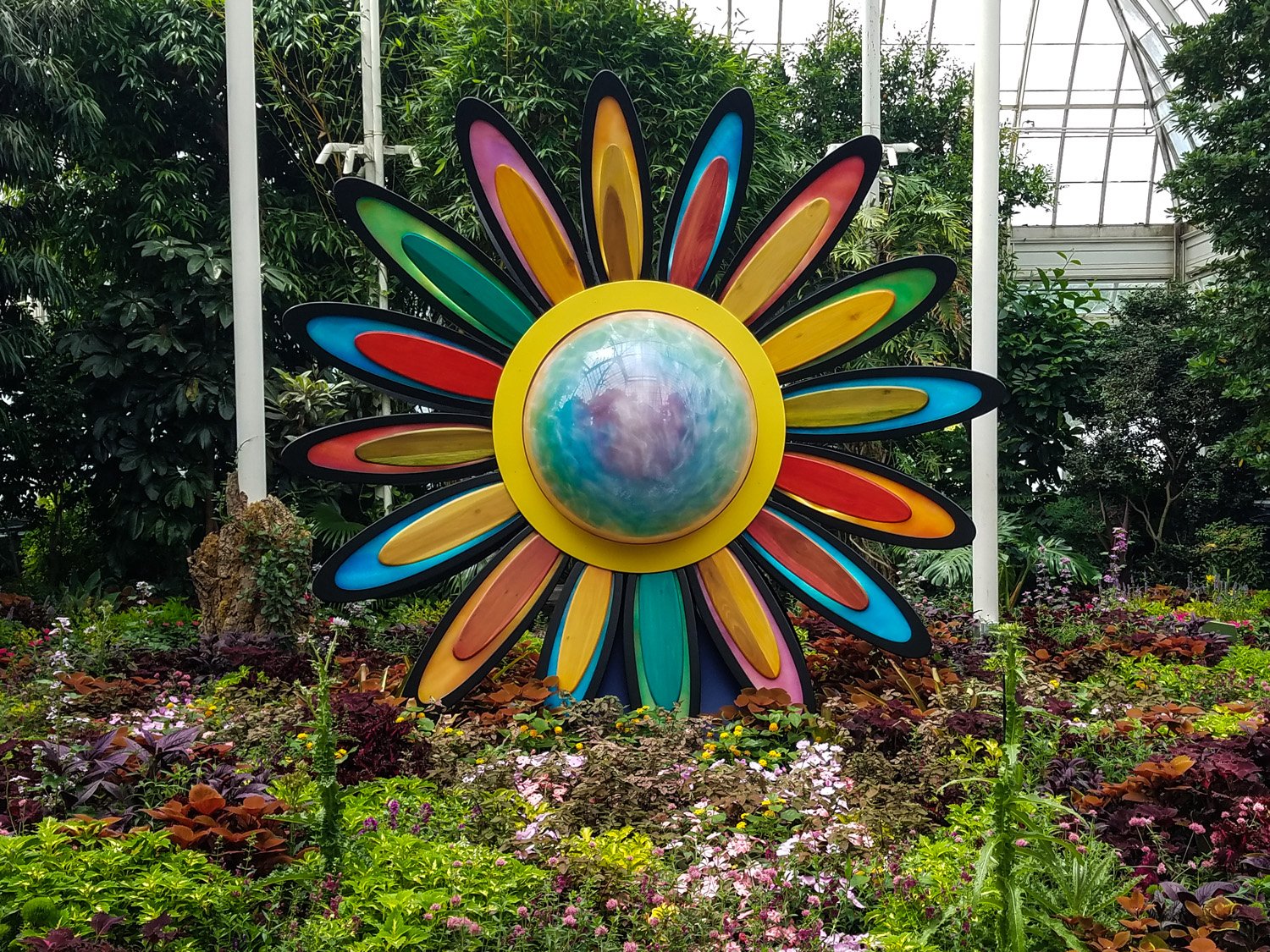
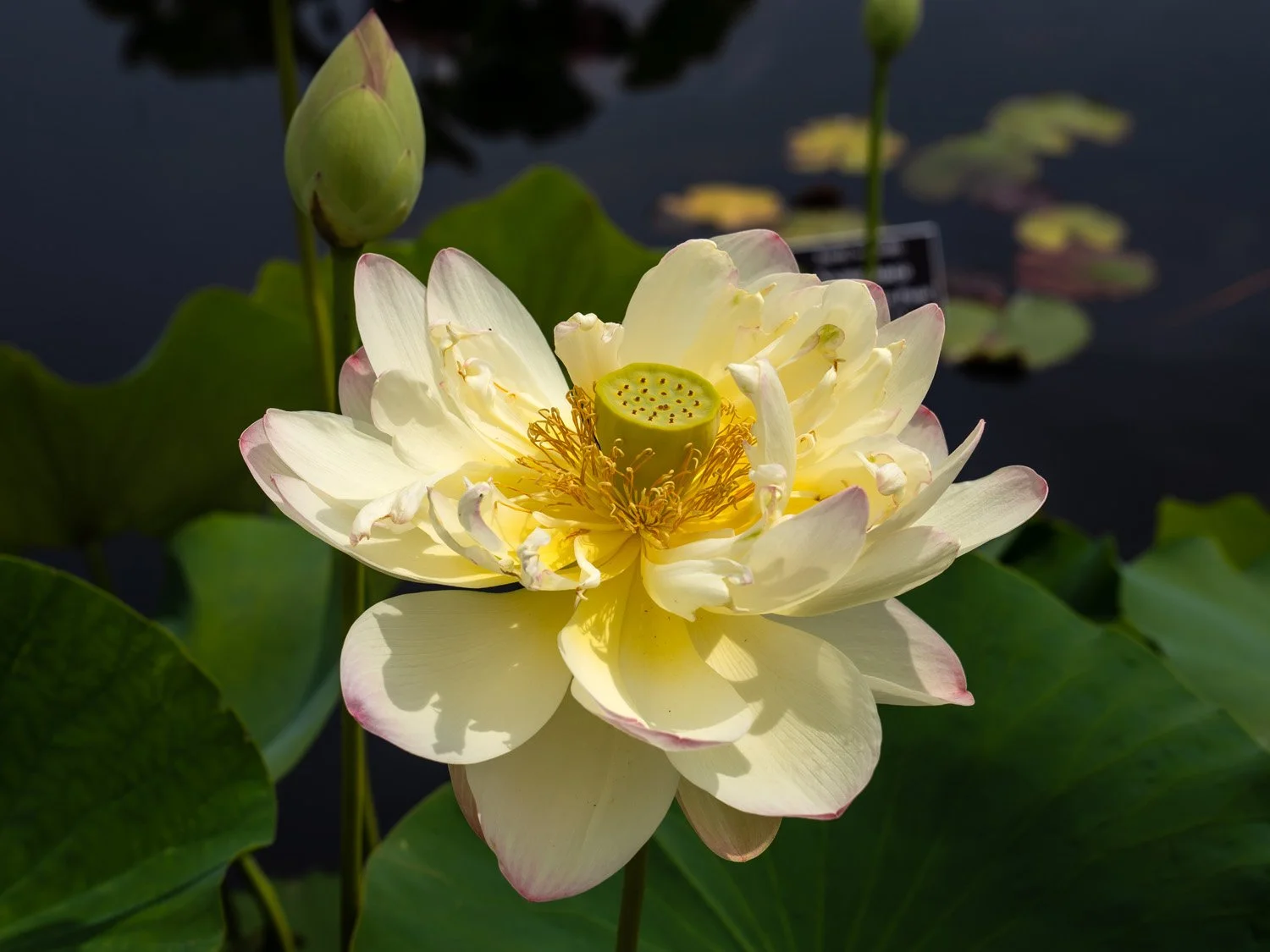
After the passage with the banners, you enter a circular area featuring a giant painted flower (or perhaps a giant painted sun?) surrounded by real flowers. After vibing out on the plantings, I headed outside to the lily pond, where the lotus blossoms and water lilies took my breath away.
An added highlight on the day I visited were a mother mallard and her three little ducklings. What joy!
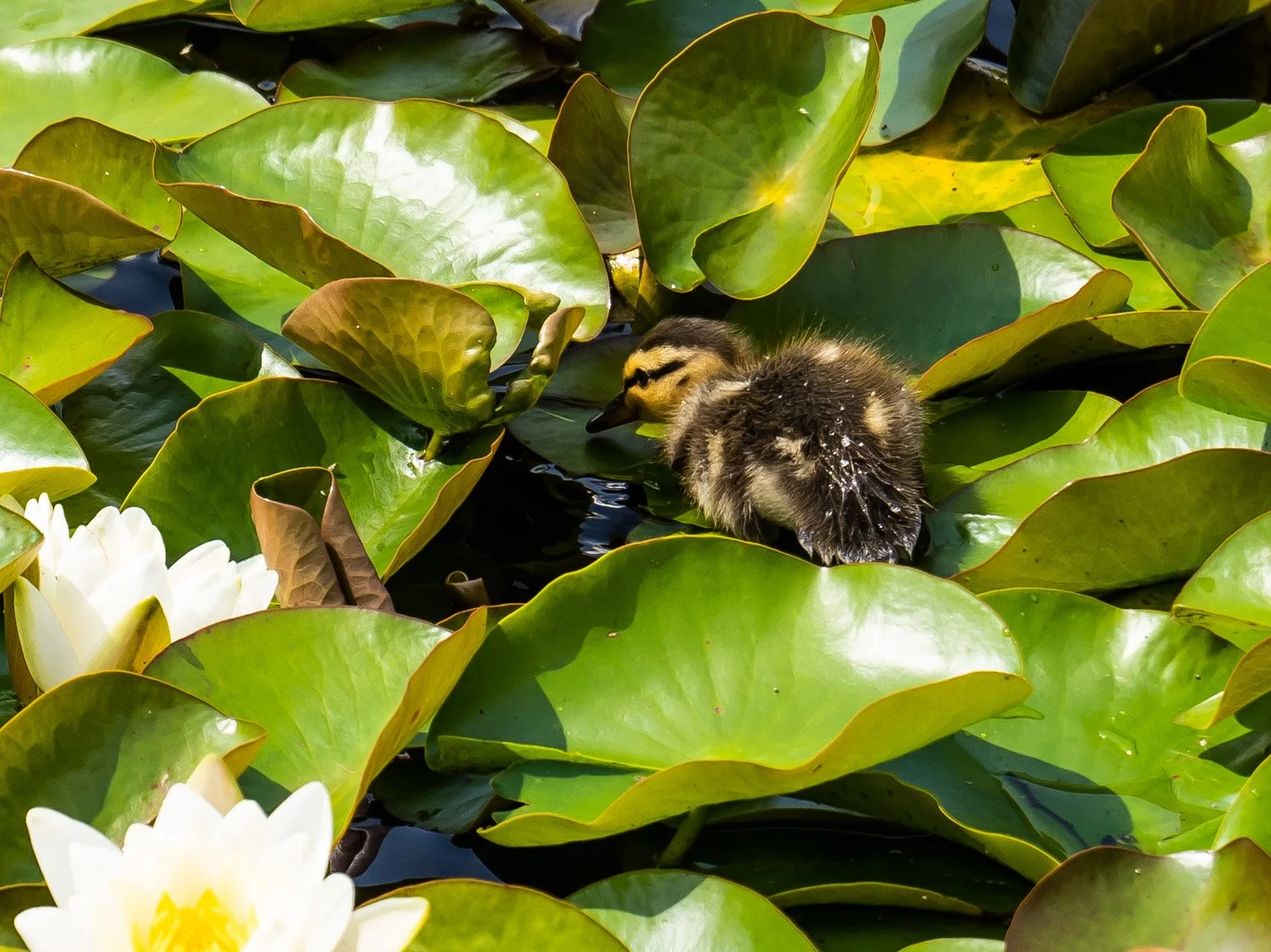
An adventurous mallard duckling, braving the lotus leaves to explore the pool.
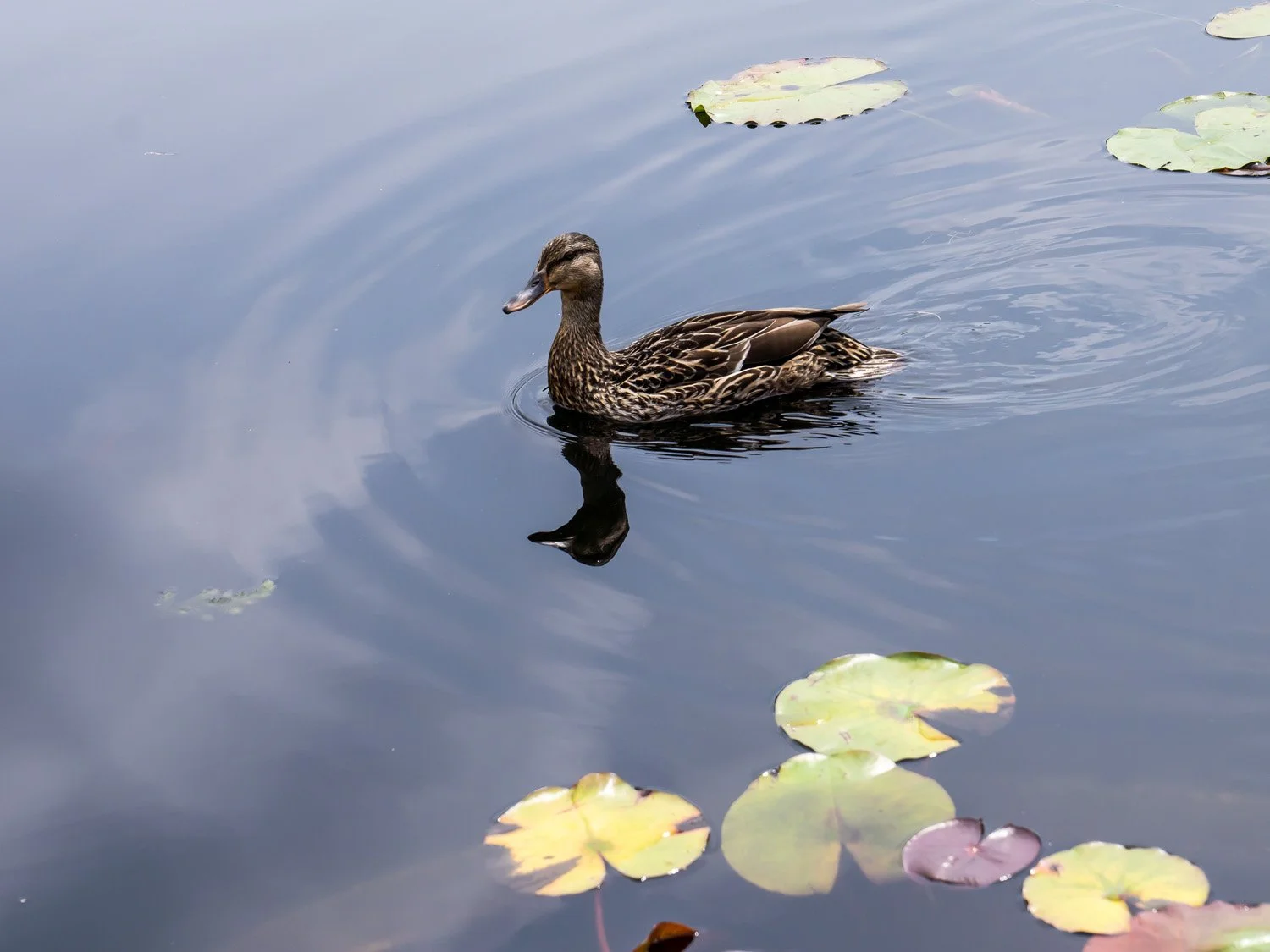
Mama Mallard looking for her kids.
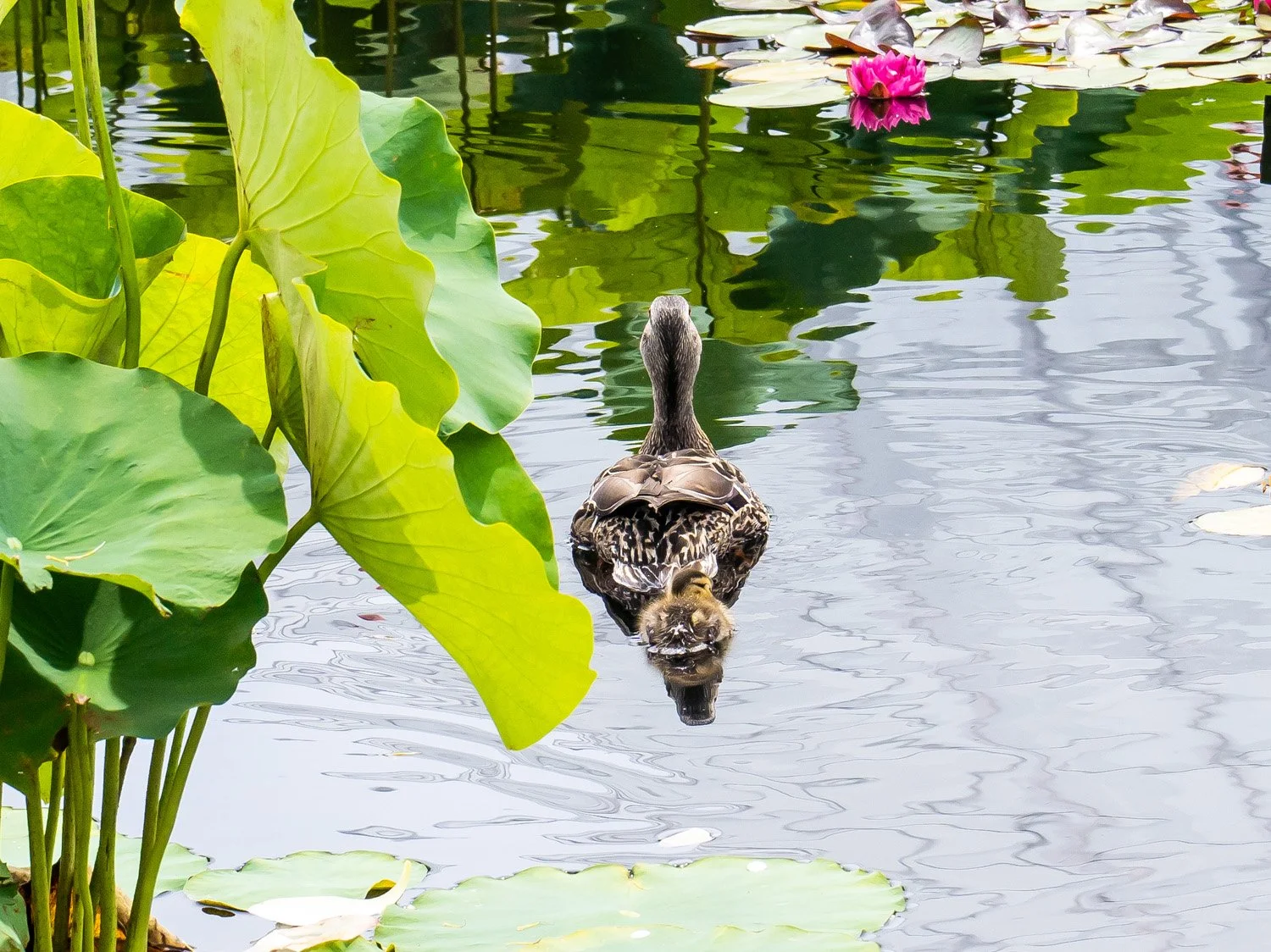
Mama Mallard leads the way.

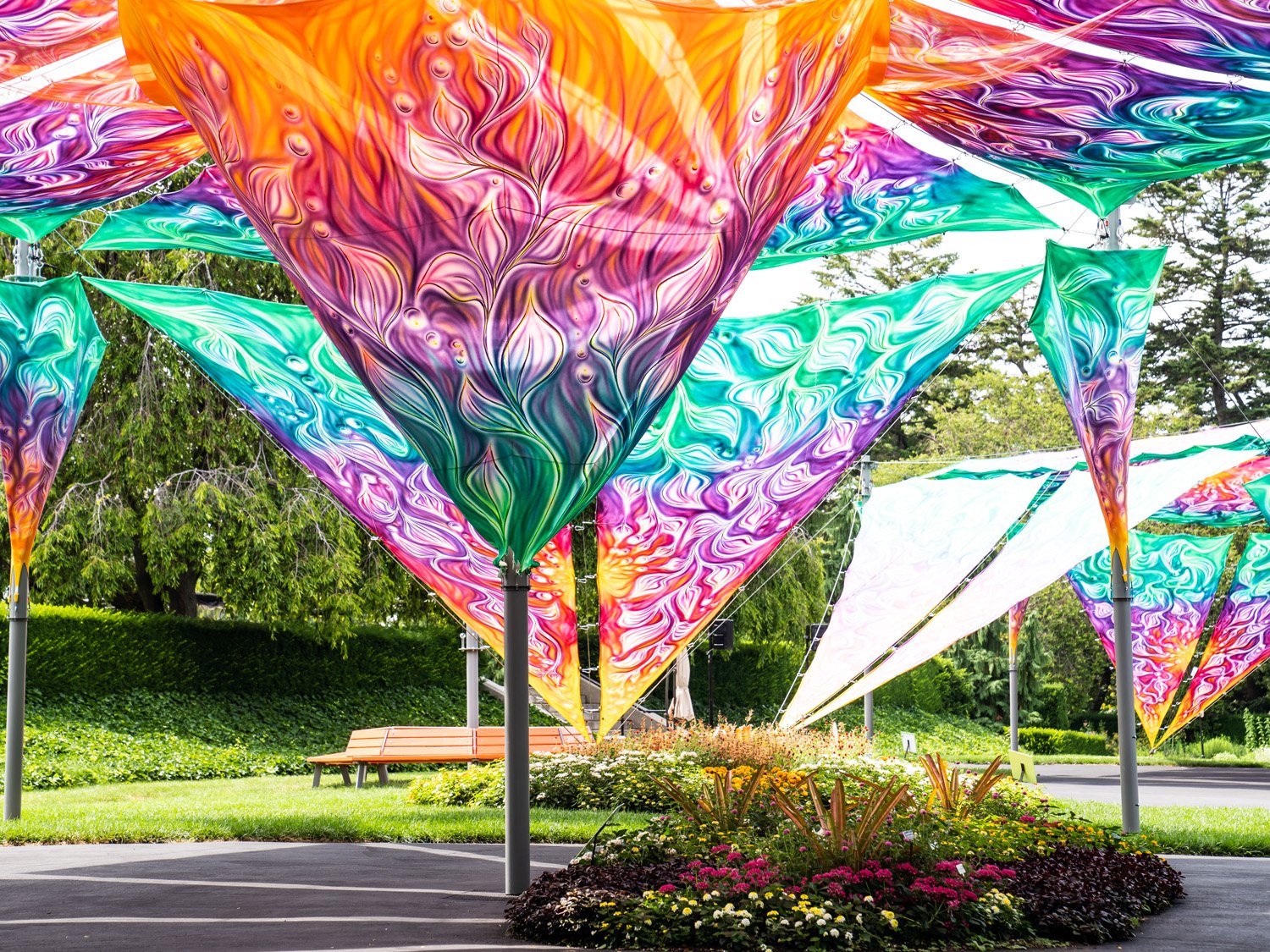
Outside the conservatory, there are tie-dyed banners shading benches convenient for rest and reflection. There is also an area where knitting and fabric projects are displayed, a nod to those young people who sought to create their own clothes and wall hangings (yes, I knitted and sewed many of my own outfits when I was in college, and did macrame, often with beads).
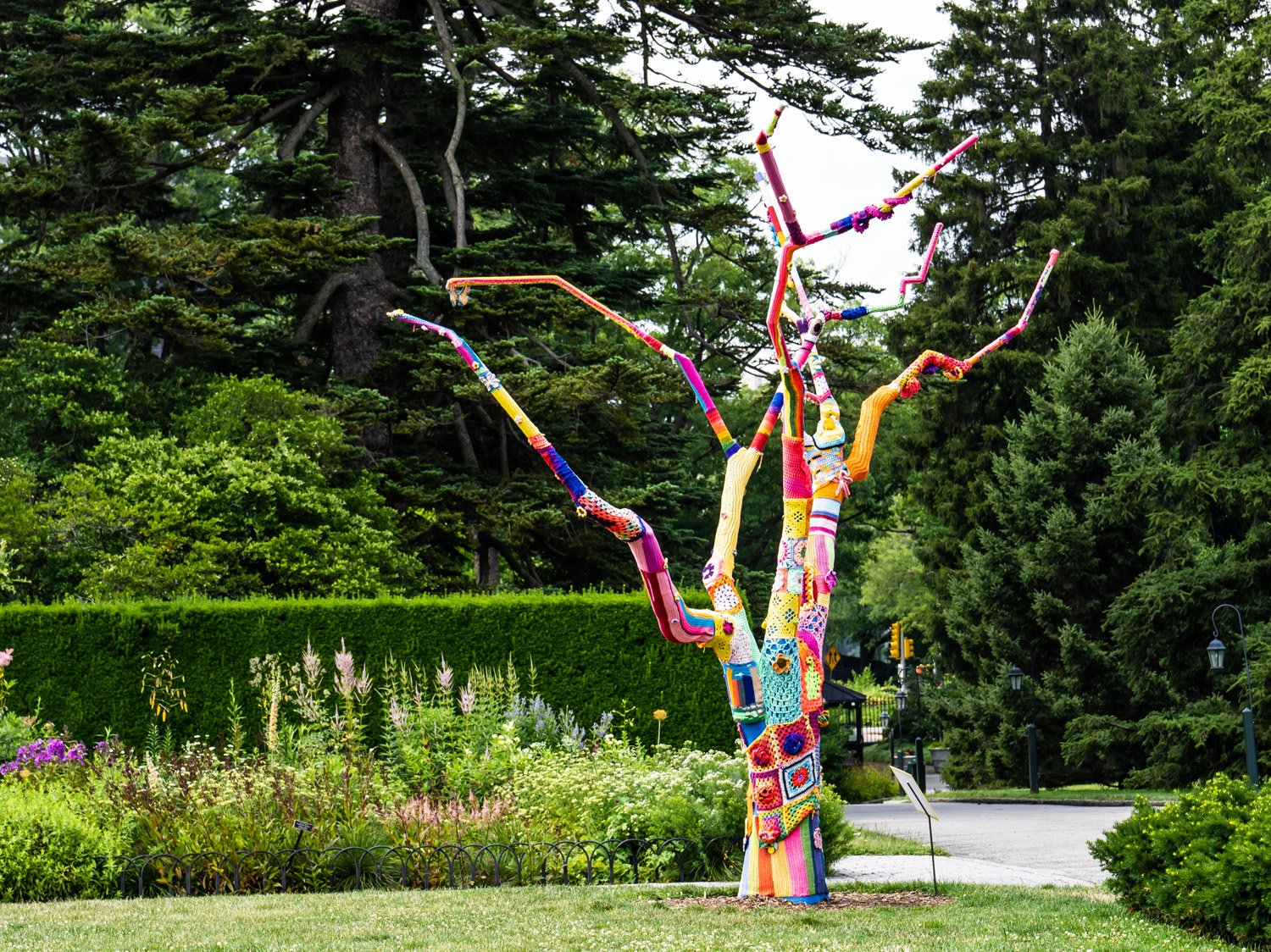
Some of the other NYBG displays include a peace symbol with flower plantings, as well as another painted van and a “Magic Bus” named Flower Power leading into the education building. Inside the building is an art exhibition with photos and memorabilia from the 60s.
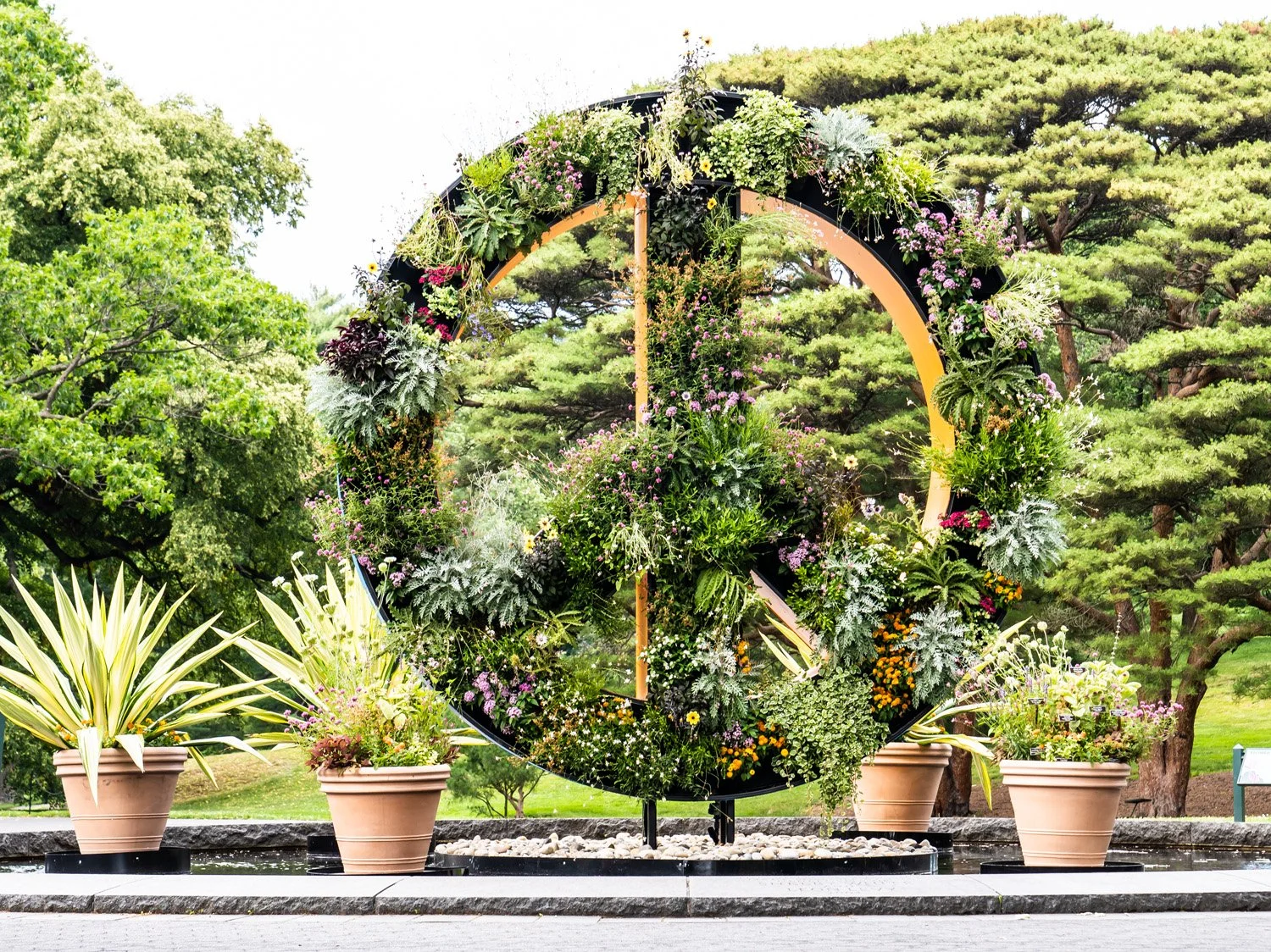
The peace symbol on the NYBG grounds.
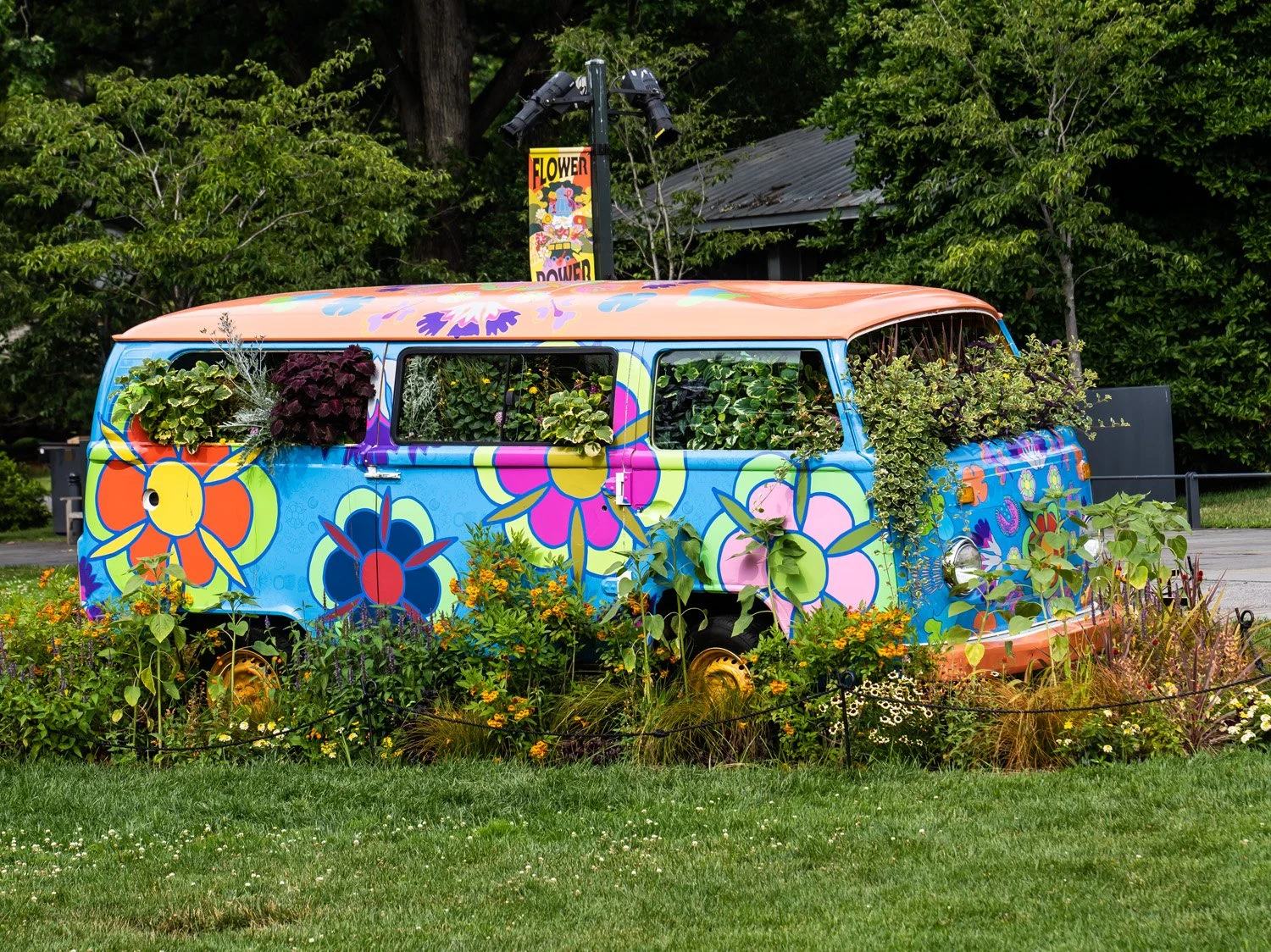
This painted van is outside the cafe.
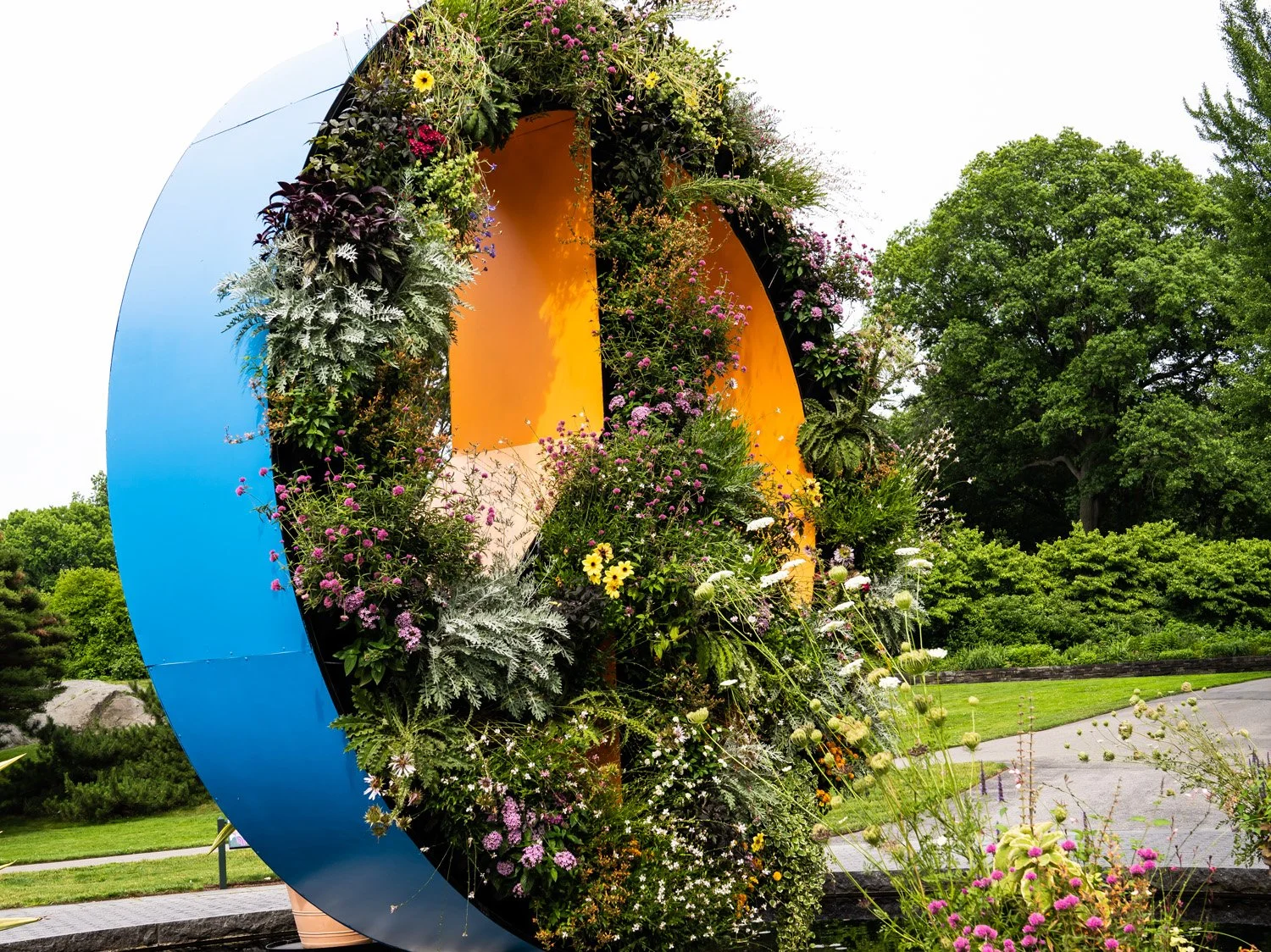
The planted side of the peace symbol.
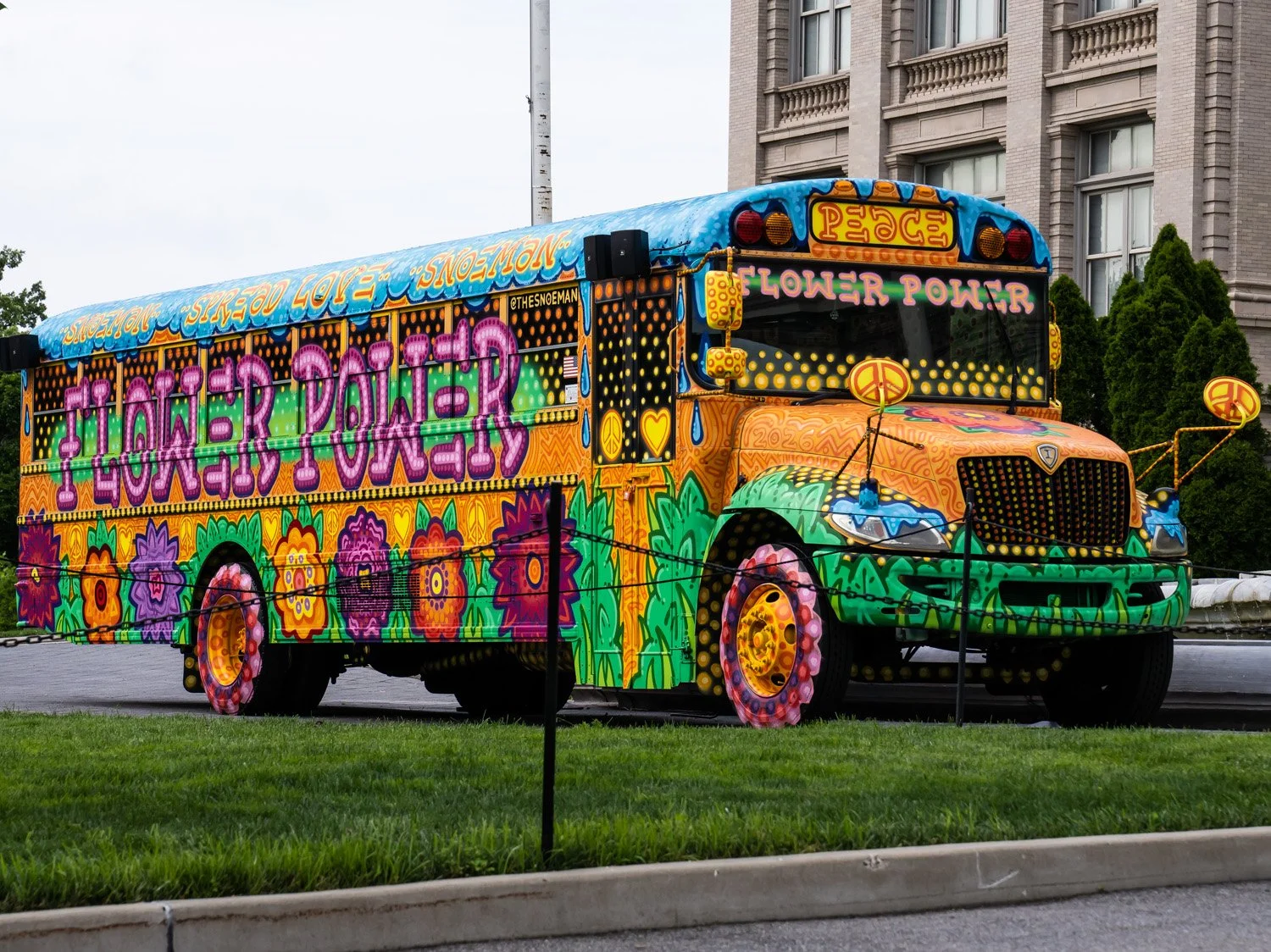
A magic bus leading into the art exhibition.

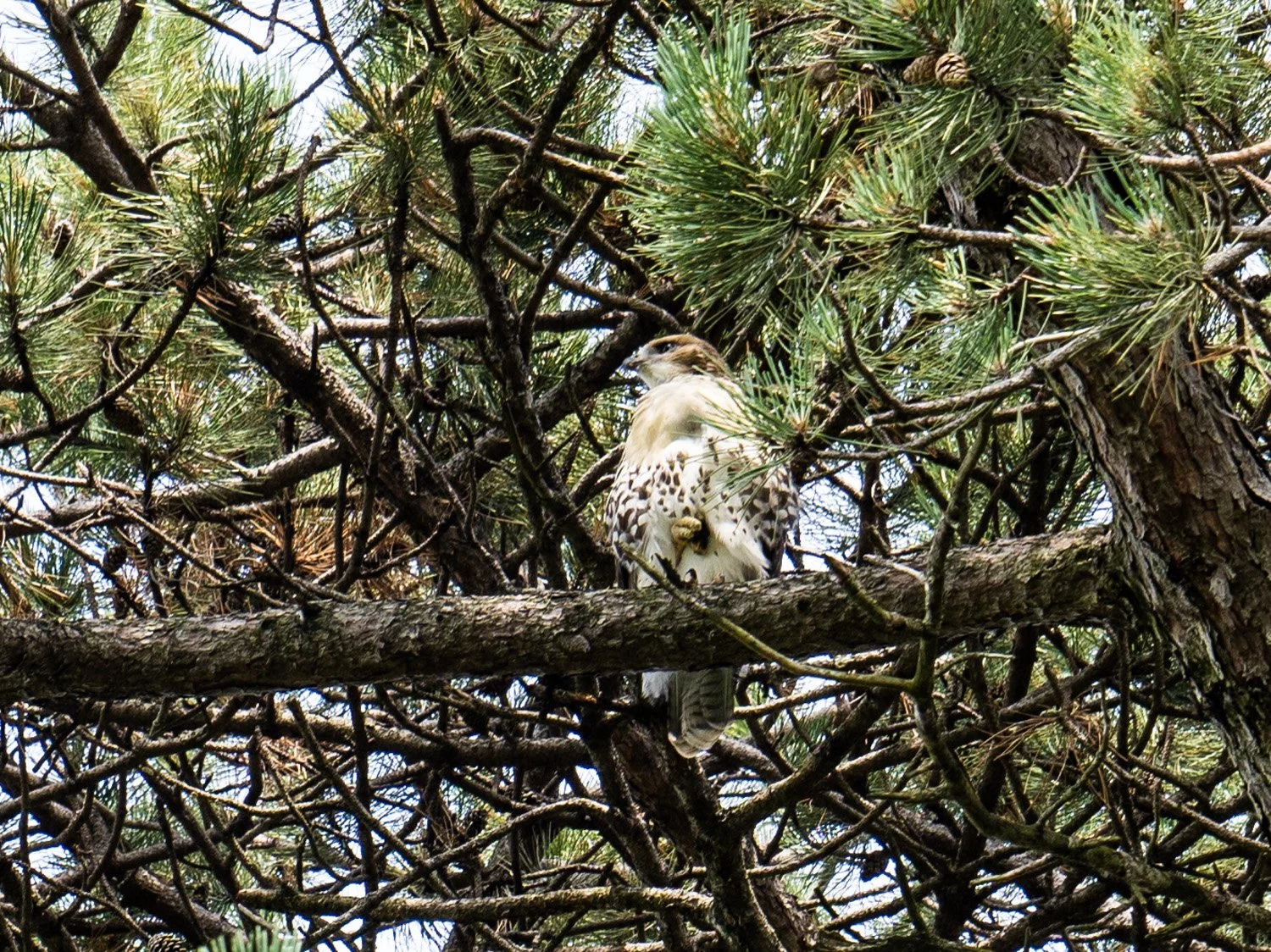
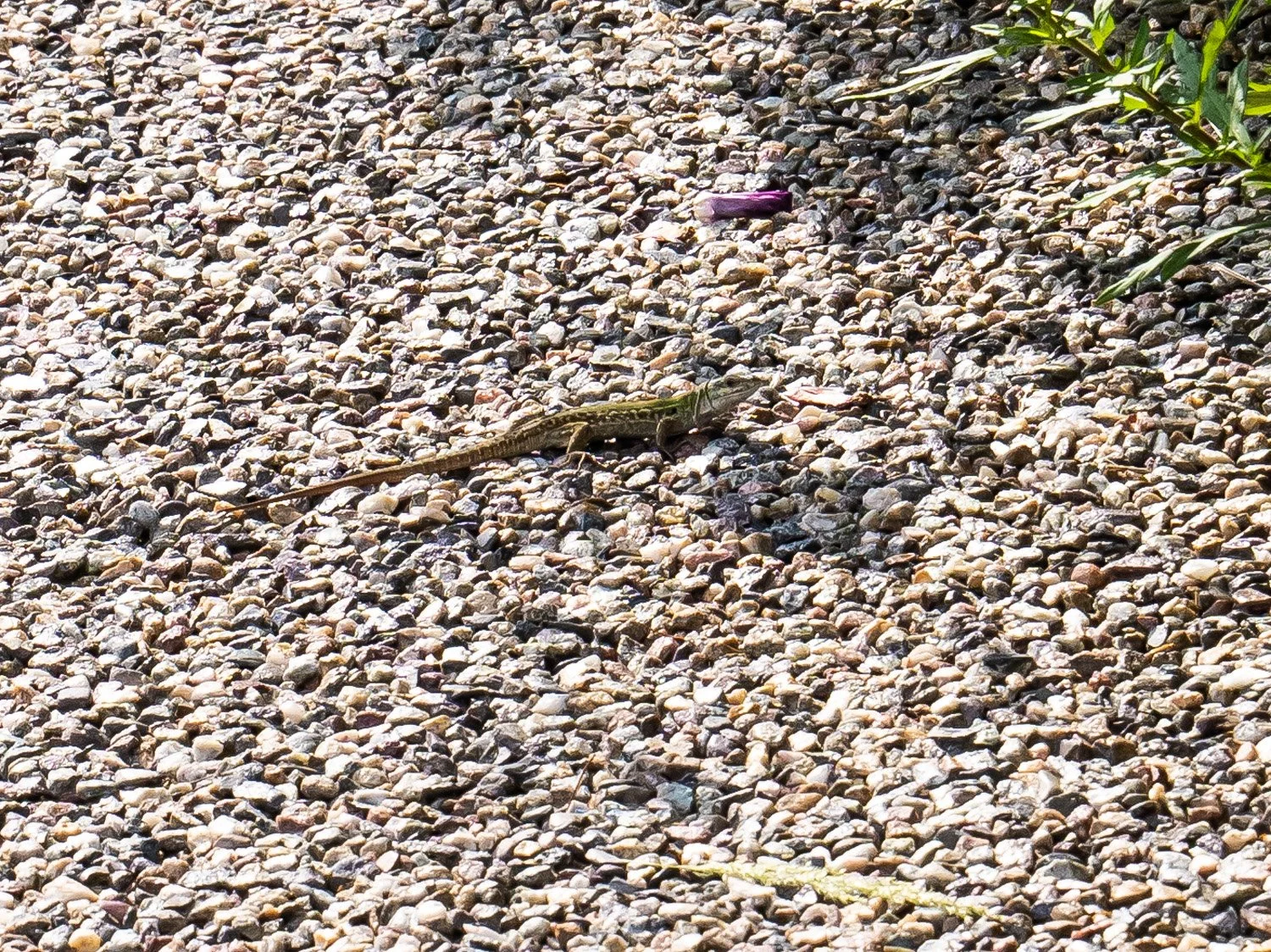
The grounds of the New York Botanical Garden are full of wildlife. Outside the conservatory, I heard the “Ooo-eeee” call of a young red-tailed hawk. In the native plantings area, I got to see a little lizard scurrying across the gravel path.
It was fascinating to watch the much younger visitors encounter an era that in so many ways defined who I became and the values I still hold dear — peace, love, music, creativity and the magic of flowers and wildlife. Could the NYBG capture all of the 1960s, into the 70s? No, but there was much here to evoke memories, and perhaps a little enlightenment. The show ends on October 18.

Van Gogh's Flowers at the New York Botanical Garden

To look at the flower paintings of Vincent van Gogh is to enter a world of overwhelming energy, movement and color. The New York Botanical Garden recognizes this and is now presenting Van Gogh’s Flowers, which highlights the profound effect of flowers and other flora on van Gogh’s art. This spring/summer show encourages us to appreciate the power in van Gogh’s paintings by looking at them from different perspectives.

Iris, Perennial Garden, New York Botanical Garden, June 12

NYBG commissioned several artists to create works influenced by van Gogh: Catherine Borowski and Lee Baker of Graphic Rewilding (Irises On Yellow Columns; All His Flowers in the Round), Amie J. Jacobsen (four large-scale sculptures inspired by four of van Gogh’s iconic floral paintings), and Cyril Lancelin (Pyramid Sunflowers).

I visited the exhibition on June 12 and 15 and filmed and photographed much of the show. This video takes you through the installations and the flower displays. The video is accompanied by music by Erik Satie, Emmanuel Chabrier and Maurice Ravel. These pieces were composed around the time van Gogh was painting many of the canvases included in the NYBG show.

Reflecting on Irises

The first display in the Enid Haupt Conservatory is Irises On Yellow Columns by Graphic Rewilding. This sculpture is beautifully reflected in the pool (although I was not impressed by the vinyl decals on the floor, which I found static and uninviting).

Irises On Yellow Columns, Catherine Borowski and Lee Baker, Graphic Rewilding

The painting that inspired the Graphic Rewilding installation was van Gogh’s Irises (1889), in the Getty Museum. After I saw the NYBG show, I visited the Metropolitan Museum of Art to re-experience that museum’s van Gogh collection. Here is his Irises in the Met Museum, a wonderful painting that captures so much movement and color. While I would have enjoyed seeing live irises near the Graphic Rewilding sculpture, I do understand that bearded irises were not blooming at the time I was at the show. So I’ve included a photo of the irises I did see later in my visit in the Perennial Garden.

Vincent van Gogh, Irises, 1890, Metropolitan Museum of Art

Irises, New York Botanical Garden, June 12

Sculpted Not-So-Still Lifes

Amie J. Jacobsen’s four large-scale sculptures, inspired by four of van Gogh’s floral paintings, are “framed” by foliage and surrounded by flowers. The pieces range between 5 and 8 feet in height. The signage shows the van Gogh painting that inspired each sculpture. Below you can see my photographs of these sculptures, plus photographs of van Gogh’s paintings I saw in the Met Museum and reproductions I have in books.

Oleanders: Van Gogh Eren, Amie J. Jacobsen, 2025

Vincent van Gogh, Oleanders, 1888, Metropolitan Museum of Art, New York City

Irises: Van Gogh Eren, Amie J. Jacobsen, 2025

Detail: Irises: Van Gogh Eren, Amie J. Jacobsen, 2025

Imperial Fritillaries: Van Gogh Eren, Amie J. Jacobsen, 2025

Roses: Van Gogh Eren, Amie J. Jacobsen, 2025

Detail: Roses: Van Gogh Eren, 2025

Signage showing Vincent Van Gogh’s Irises, 1890, Van Gogh Museum, Amsterdam

Detail: Irises: Van Gogh Eren, Amie J. Jacobsen, 2025

Vincent van Gogh, Imperial Fritillaries in a Copper Vase, 1886, Musée d’Orsay, Paris

Vincent van Gogh, Roses, 1890, Metropolitan Museum of Art, New York City. Jacobsen’s sculpture reflects the original pink color of the roses in the painting. That color has since faded.

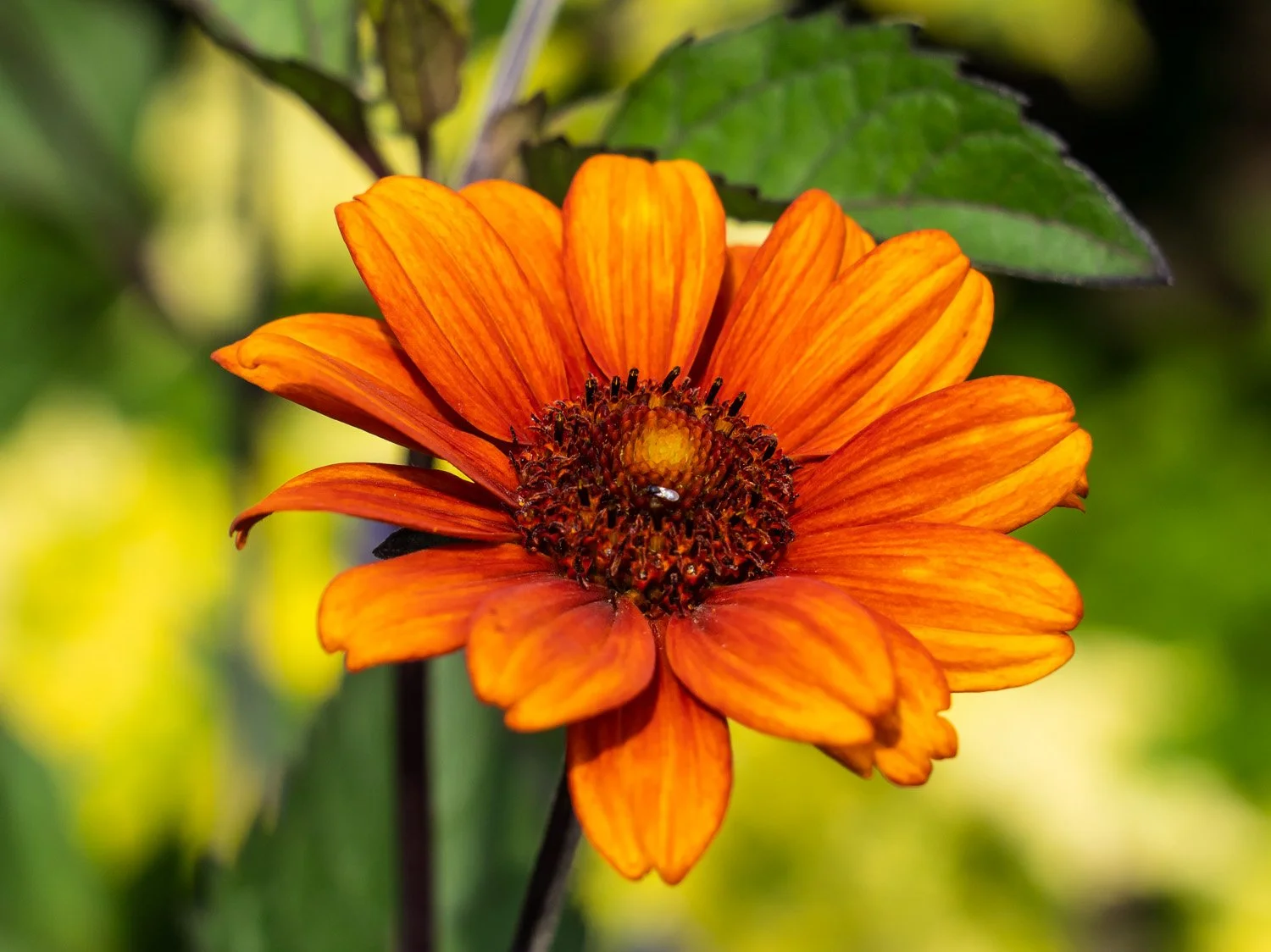
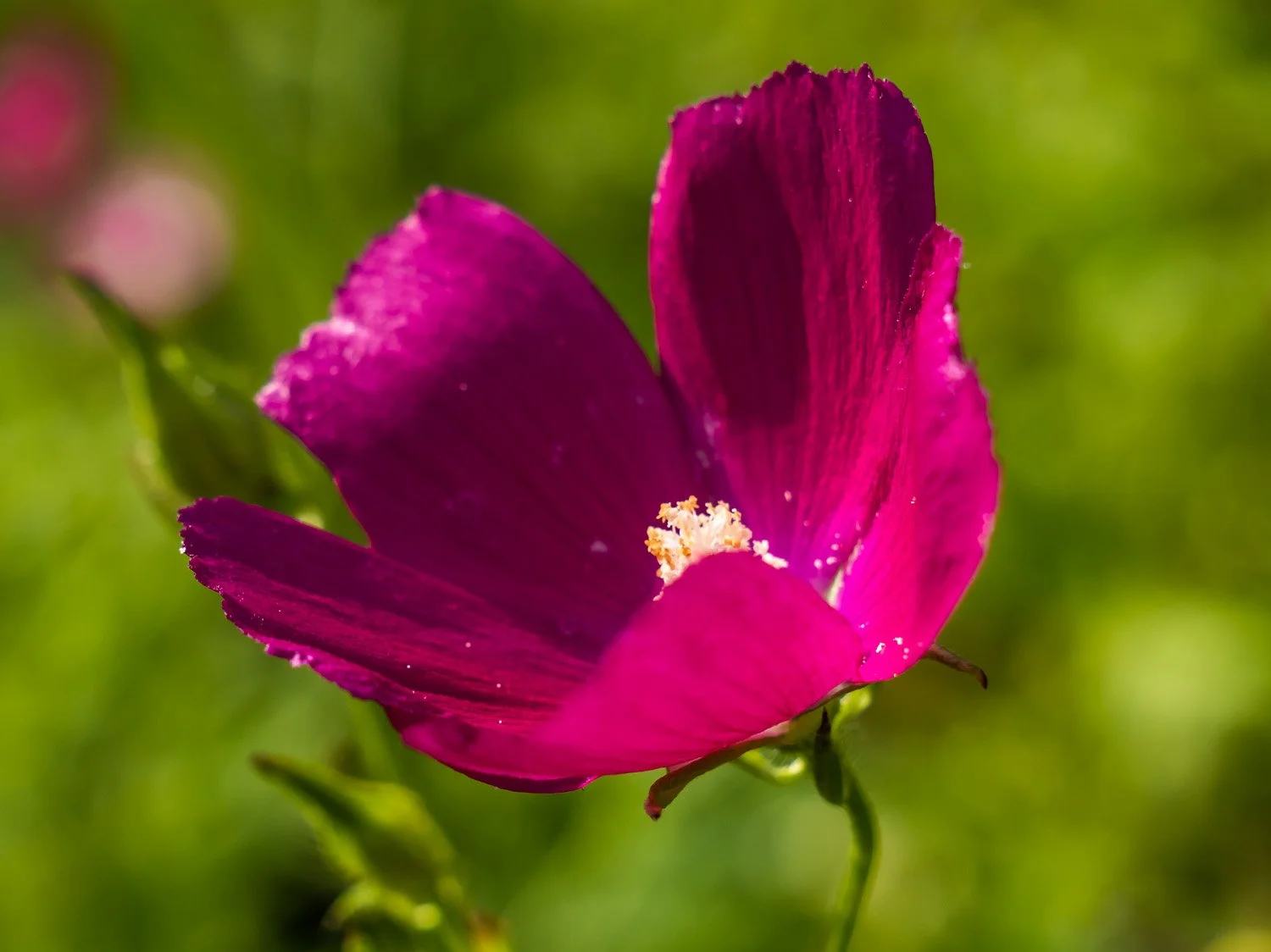
The flowers surrounding the Jacobsen sculptures are stunning, and many are flowers van Gogh might have seen. This field poppy and the slide show that follows offer some of my favorite flower photos from my visit.

Field poppy. Van Gogh’s depiction of poppies as dabs of paint can be seen at the bottom of his cypress painting at the Met Museum.

Reimagining the Hospital Garden at Arles

In 1889, van Gogh spent much of the year at a hospital in Arles, France, where he painted the view from his window. The botanical garden has a room in the conservatory that suggests this garden, and as you will see in the video, also suggests the yellow-trimmed walkway in the courtyard.

NYBG’s circle garden, after Vincent van Gogh’s Garden at the Hospital at Arles, 1889

Signage for the circle garden at NYBG.

The Joy of Sunflowers

Van Gogh wrote to Theo van Gogh, his brother, in 1888: “Sunshine, a light which, for want of a better word I can only call yellow—pale sulfur yellow, pale lemon gold . . . How beautiful yellow is!” It is thrilling to look out over so many sunflowers in front of the conservatory. Cyril Lancelin‘s Pyramid Sunflowers welcomes visitors into the garden, with the swaying flowers and the buzzing bees.

Vincent van Gogh, Sunflowers, 1887, Metropolitan Museum of Art, New York City

Pyramid Sunflowers, Cyril Lancelin

Fascinating sunflower facts in the sunflower garden.

Detail: Pyramid Sunflowers

Framed Flower Art in the Perennial Garden

In the garden outside the conservatory are several easels set up with flowers and foliage bursting through golden frames, a tribute to the attraction of artists to flowers and plants.

I love how the flowers and leaves spill over the gold frame.

Throughout the walk to the Enid Haupt Conservatory and elsewhere in the garden are quotes from Vincent van Gogh from his letters.

The Perennial Garden has exquisite flowers to savor, with the framed floral art nestled among the blooms. The selection of flowers will change during the run of Van Gogh’s Flowers depending on what plants are in season. I was so happy I was there when I could see the purple irises, when some of the peonies were still buds while others had opened fully, and when the clematis was climbing up the trellises. The photo below and those in the slide show that follows show some of the brilliant blossoms from mid-June.

Outside the NYBG gift shop is a fun sculpture of a painter’s palette, with the “paint” made of flowers. I didn’t note the artist who created it.

Vincent’s Subjects in the Round

The Graphic Rewilding sculpture in the fountain down the walk from the restaurant and gift shop was my last stop in the Van Gogh’s Flowers show. Other parts of the New York Botanical Garden are stunning (I am so attracted to the Thain Family Forest and the Rock Garden) and can make for a very full summer’s day visit. There are also special programs offered on some evenings. Van Gogh’s Flowers can be visited through October 26.

All His Flowers in the Round, Catherine Borowski and Lee Baker of Graphic Rewilding